Expect to hear the name ‘Ford Kuga’ late this year when ‘Car Of The Year – Compact SUV’ is discussed. While the good-looking newcomer is an all-new nameplate for Ford Australia, Kuga is a tearaway success for Ford in Europe.
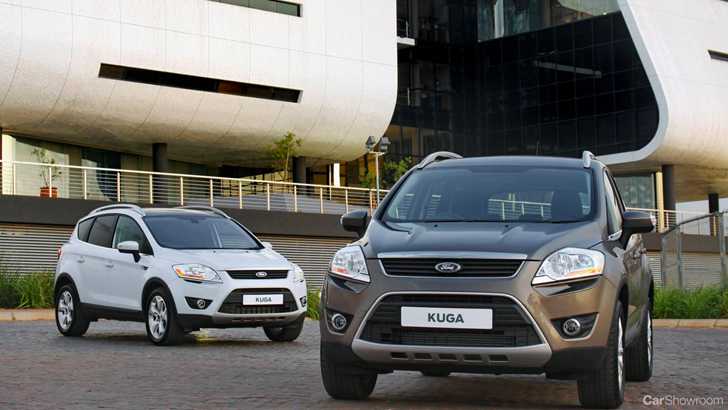
Terrifically screwed together by Ford in Germany, the stylish and practical Ford Kuga goes on-sale locally next month and enjoys handy performance thanks to Ford’s 2.5-litre, five-cylinder turbo petrol engine.
Ford has launched the current generation Kuga in Australia, but only 200 vehicles per month is all that could be squeezed out of Ford Europe’s hectic production schedule - crucially those 200 vehicles give Ford extra traction in the burgeoning SUV segment. Last year, SUV’s represented about 25 per cent of Australian new car sales and 12 per cent of those were compact SUVs.
Ford’s global ‘One Ford’ new model onslaught is impressive – no doubt about it. The German-origin Ford Kuga joins other Ford Europe models – Fiesta, Focus and Mondeo – to give Ford Australia its best-ever product portfolio. And don’t forget, Australia is part of that ‘One Ford’ process – the new Ford Ranger ute was designed and engineered by Ford Australia and is now sold around the world.
Ford Kuga Overview
For a little while, Ford will have two compact SUVs – the ageing Escape which is coming to the end of its life and now the all-new Kuga. This generation Ford Kuga runs on the previous generation Ford Focus platform (the next generation will us the platform of the Focus now sold here).
Ford Kuga will be sold in two model grades (both all-wheel-drive) with the usual Ford nomenclature – mid-range ‘Trend’ and high-grade ‘Titanium’.
The full range is
Ford Kuga Trend $38,990
Ford Kuga Titanium $44,990
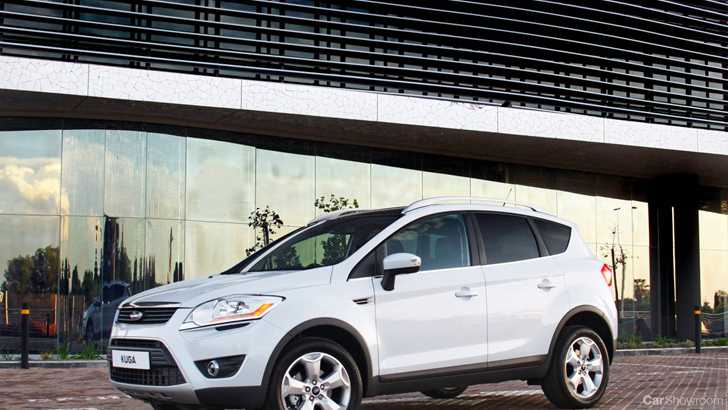
Both are extensively equipped with contemporary features like cruise control, keyless push-button start, four-spoke, leather wrapped steering wheel (height and reach adjustable), air-conditioning, Bluetooth with voice control and a two-piece flip-glass for the cargo area.
Amongst its extras, Kuga Titanium grade gains leather seats (both fronts heated and there’s electronic adjustment for the driver), 18-inch alloy wheels, a panoramic fixed glass roof, rear parking sensors and flip-up tray tables for rear seat passengers.
And good news on the safety front with Ford Kuga rated at the maximum five-star level by ANCAP – equipped standard with six airbags, traction control and stability control (with anti-rollover mitigation).
Ford Kuga Engine
Ford Kuga performance is rapid thanks to the well-known Duratec 2.5-litre turbocharged five-cylinder petrol engine – the same engine used by Volvo and also Ford (fitted to the sporty Ford Focus SR5).
Maximum power is 147kW at 6000rpm and peak torque is 320Nm between 1600rpm and 4000rpm.
The Car Showroom team is a long-term fan of this wonderful, high-tech, five-cylinder powerplant. We love the sound under hard acceleration and the superior mid-range torque over say a 2.0-litre, four-cylinder always impresses.
By today’s standards, Ford Kuga’s Duratec five-cylinder isn’t the most meager when it comes to fuel consumption – rated at 10.3l/100kms. That said, of comparable rivals, the hot-selling Mazda CX-7 fares considerably worse in that department at 11.5l/100kms.
In answer to the obvious question – diesel. Right-hand drive diesel versions of this generation Ford Kuga are only available with a manual transmission and Ford Australia reckons demand for a diesel manual would be very low. With only 200 vehicles per month available from the German factory, local management – probably rightly – decided to kick things off with just a petrol automatic.
Ford Kuga The Interior
Ford Fiesta, Focus, Mondeo, Ranger and now Kuga are on a familiar theme when it comes to interior design – and it’s a good one. Like the others Kuga adopts a smart layout for the dashboard and centre console and provides an up-market feel thanks to high quality trim materials and a nice colour palette in black and silver.
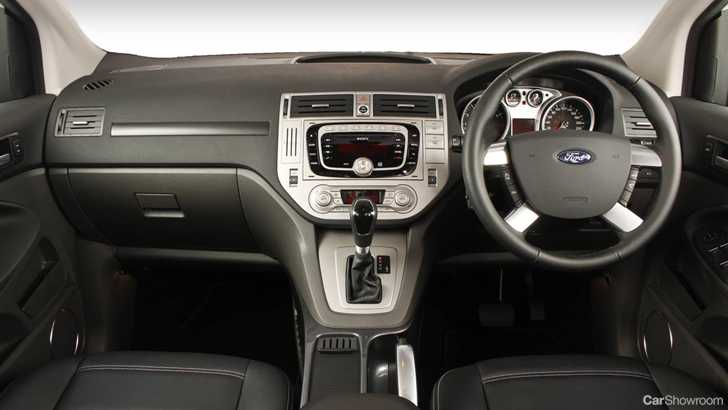
The leather-wrapped steering wheel adjusts for rake and reach and contains simple buttons for the cruise control. Remote audio adjustment comes in the form of a separate panel mounted on the steering column.
We liked the supportive sports from seats (leather-trimmed in the Titanium model) and the stylish design of the instruments. Audio is an eight-speaker Sony CD/MP3 system with a USB port, AUX jack, voice control and Bluetooth.
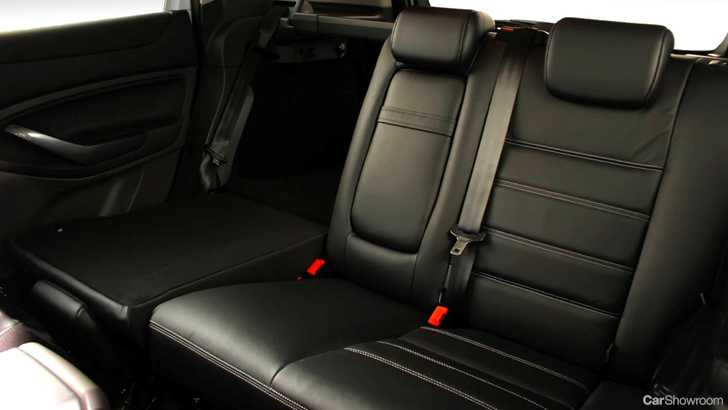
Rear seat legroom doesn’t quite match the segment’s best but at least in Kuga’s Titanium grade, those in the back get a fold-down ‘picnic’ table and a fold-down centre console with cup-holders.
Ford Kuga luggage space is impressive at 360-litres (rear seat in-place) or 1355-litres (rear seat folded).
Ford Kuga Exterior & Styling
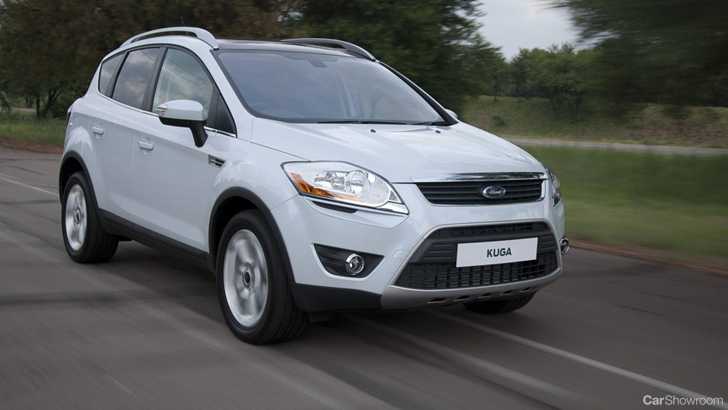
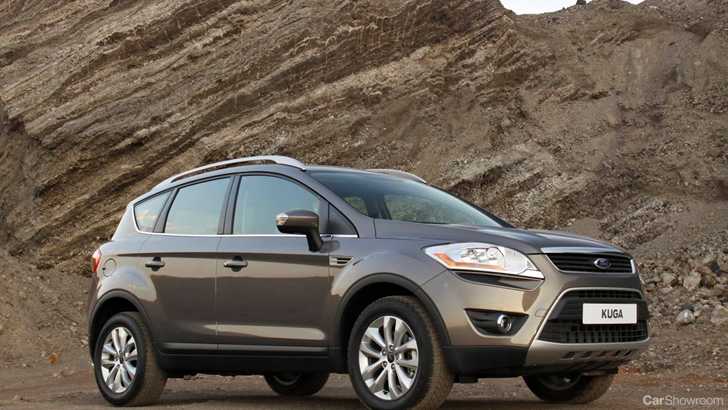
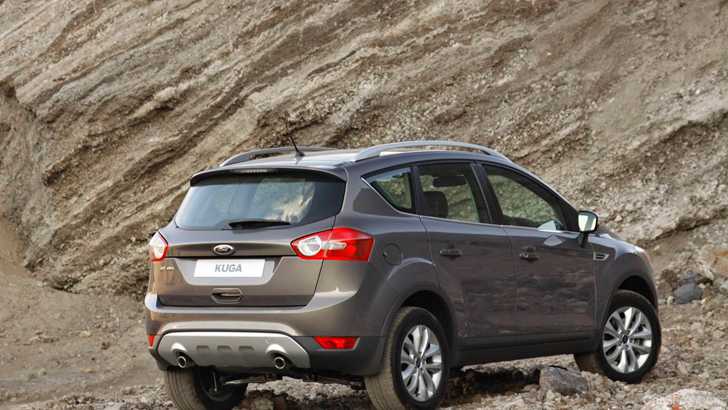
Ford Europe has done a great job styling the Kuga. It’s sharp and contemporary, offers obvious 4WD toughness (ride height and the matt anthracite protective lower panel which runs down both sides) but is not ‘so-off-road’ to intimidate family and first-time compact SUV buyers.
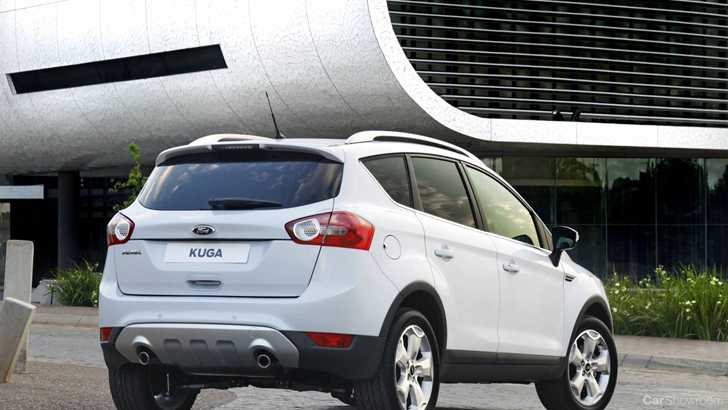
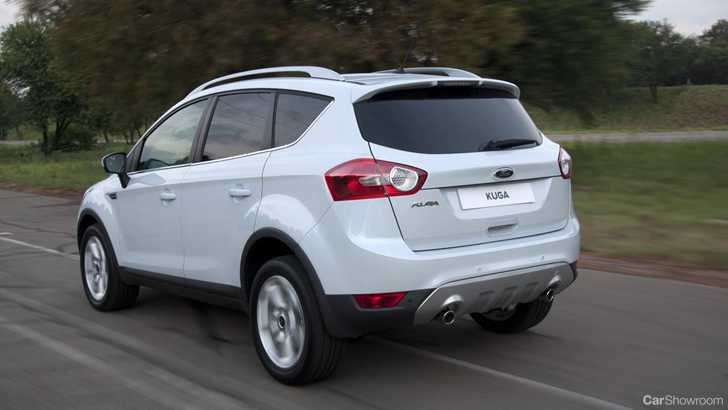
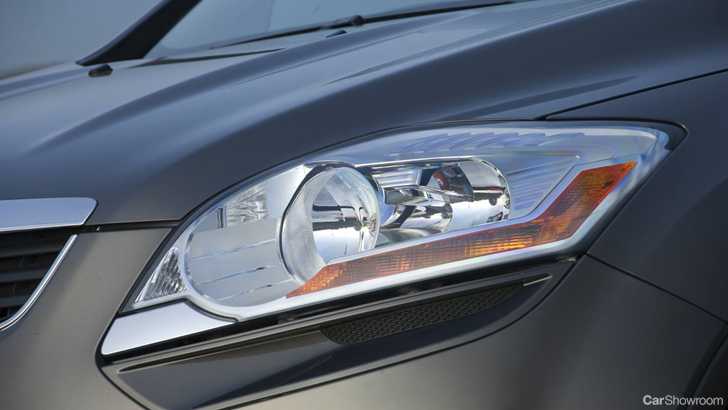
We like the bold, ‘Ford Family’ front end with nice, modern lights and power bulges on the bonnet and we particularly like the rear with separate-opening tailgate glass (for quick loading of smaller items) and prominent diffuser-like skid plate.
Ford Kuga’s side profile is athletic with a pronounced shoulder line and prominent wheel arches (17-inch alloys on ‘Trend’ variant and 18-inch alloys on ‘Titanium’). Front fenders are made from plastic to keep weight down.
Ford Kuga On The Road
Ford staged the media review for the all-new Ford Kuga in New Zealand. The route covered city and freeway roads out of Auckland and the terrific rural roads north of the city up to Matakana.
First things first, that turbocharged 2.5-litre five-cylinder engine remains one of our firm favourites. Mated to Ford’s five-speed automatic transmission with sequential manual mode we were able to quickly and easily negotiate our way through an Auckland morning peak.
And once onto the rural roads the Ford Kuga instantly showed its European pedigree with firm ride, reasonable precision and nice balance.
If we were to be picky, and bearing in mind we do prefer the taut suspension calibration of European vehicles, we’d say the MacPherson strut front suspension of the Ford Kuga could do with a bit more softness on the compression stroke (to accommodate the rough terrain of local roads) and the power steering system needs some re-calibration to dial out a degree of torque steer as the 4WD system works mid-corner at speed.
But remember this generation Ford Kuga rides on the previous generation C-segment chassis architecture – the all-new model (don’t know when it’s due ‘Downunder’) will ride on the same chassis as the current model Focus.
So, really, after a full day on those Kiwi roads, our only significant points deduction would be for tyre noise on coarse-chip bitumen secondary roads…and there’s an override there. The test vehicles were New Zealand specification with 19-inch alloy wheels fitted with made-in-Portugal Bridgestone tyres.
Of course Aussie-sped Ford Kugas will run 17-inch (Trend) and 18-inch (Titanium) alloys which should introduce a bit more refinement.
Ford Kuga Challenges
Ford had no choice – regardless of the lack of a diesel engine, the current generation Kuga just had to be launched in Australia now in order to get better a better foothold in our exploding compact SUV market. The 200 Kugas per month heading this way from Germany will rush out the doors of Ford dealerships without a problem…but how many more would be sold if Ford could have secured a diesel?
And we have to reserve judgment just a tad until we get to drive Australian Ford Kugas with 17-inch and 18-inch wheels on local roads.
Ford Kuga Verdict
No doubt about it, here is another terrific car from Ford Germany. Styling inside and out is top notch, quality is superb and – crucially for family buyers – practicality and safety both get big ticks as well.
We think the Ford Kuga driving dynamics are generally European firm and precise – the caveat being those 19-inch wheels on New Zealand roads.
There are some tough choices facing Australian compact SUV buyers and lots of hard work for dealership sales staff. But don’t question the Ford Kuga because it’s new – remember this car has been a runaway success in Europe and we can assure you it’s a must-include on your shopping list.
Ford Kuga The Opposition
If nothing else, Australia’s compact SUV segment offers massive diversity for buyers. One the one hand, the best-selling Subaru Forester (starting price $30,990) is very much a wagon - so it doesn’t have the space and versatility of the Ford Kuga.
Subaru counters that argument with the just-launched XV model, very sharply priced from $28,490. The Subaru XV looks the business but driving dynamics don’t quite match the German sportiness of the Ford Kuga.
The long-term best-seller in this league has been Toyota’s RAV4 (all-wheel-drive versions start at $31,990). Toyota’s 125kW/224Nm 2.0-litre, four-cylinder is outmuscled by Ford Kuga’s 147kW/320Nm five-cylinder turbo and for some buyers the RAV might be too SUV-like.
Nissan’s X-Trail is also a perennial favourite with compact SUV buyers and for us comes closest to rivaling the Ford Kuga. All-wheel-drive X-Trail’s start at $32,490 and although the Nissan is comprehensively outgunned in the engine department it offers more rear-seat legroom and compares well with the Kuga for driving dynamics and luggage space.
Also on your list should be Kia Sportage, the segment’s styling superstar with nice driving dynamics and good interior space. All-wheel-drive Kia Sportage petrol starts at $32,220.
You should also consider Hyundai ix35, Mazda CX-7 and the new Jeep Compass.
Ford Kuga Likes:
Terrific styling job inside and out; a lot of car for your coin; usual Ford Germany high standard production quality
Ford Kuga Dislikes:
Not the lightest fuel consumption in this segment (but the top-selling Mazda CX-7 uses more fuel); rear seat legroom not the roomiest; tyre noise on test vehicles (with 19-inch wheels).


