Look closely at the photos of Toyota’s all-new Prius V and you’ll see Sydney’s South Cronulla beach. Of all the Cronulla beaches, South Cronulla is the one for families - mostly small waves, lots of sand for sandcastle-building and nice cafes for mum and dad.
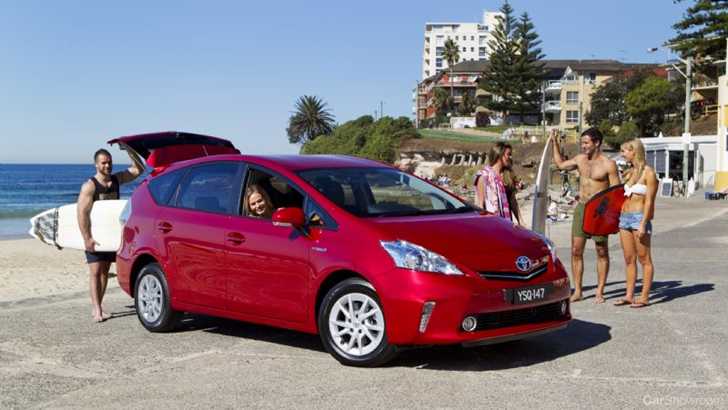
A happy hunting ground for the latest member of Toyota’s Prius lineup – the Prius V which brings hybrid motoring to larger families thanks to its smart seven seat configuration.
Combine the seven-seat Prius V with the well-known Prius hatchback and compact Prius C and the Prius lineup is now looking very thorough indeed. So thorough in fact that Toyota reckons by the end of the decade, the Prius range will outsell the Toyota Camry in North America.
Toyota Prius V Overview
You could say the seven-seat Prius V is the Prius Toyota always needed as families have been early-adopters of the whole ‘going green’ philosophy – but until now had no powertrain alternative in the ranks of MPV vehicles.
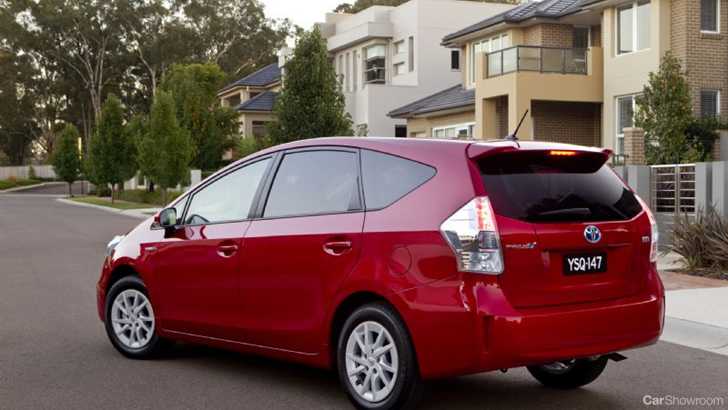
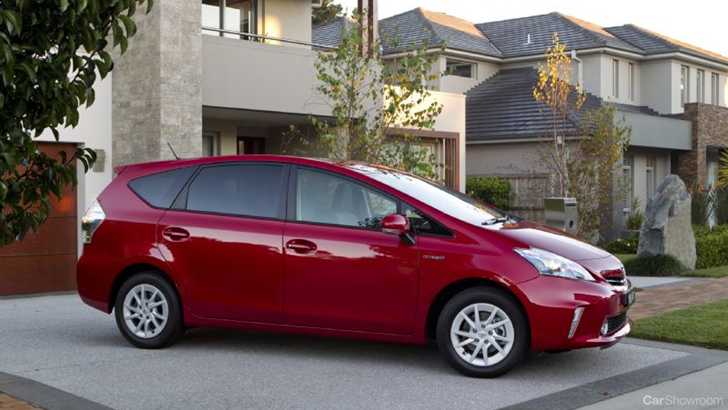
Longer, wider and taller than any other Prius, the Toyota Prius V caters to families and its clever, spacious interior can also be configured to light delivery work.
Toyota Prius V Engine
Toyota’s now-familiar 1.8-litre Atkinson cycle petrol-hybrid system delivers a combined 100kW of power (73kW from the petrol engine) and 142Nm of torque with fuel consumption (combined cycle) rated at just 4.4l/100kms.
Drive is to the front wheels via a Continuously Variable (CVT) automatic transmission.
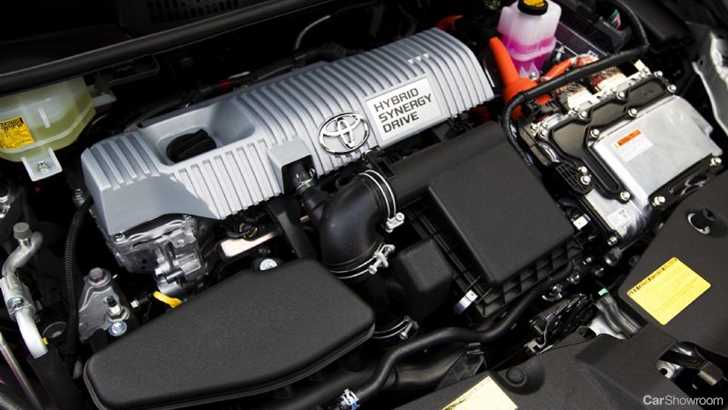
But the big news is the batteries. Toyota Prius V is the first Toyota passenger car to adopt lithium-ion batteries (the other Prius models use Nickel-Metal-Hydride). Much smaller (about half the size) and 7kgs lighter, the lithium-ion battery pack is stored between the two front seats.
This change has been assisted by ramped-up production of lithium-ion batteries. Toyota and BMW are currently working collaboratively in developing future generation lithium-ion batteries and only good things can result from these two automotive giants working together.
Toyota Prius V The Interior
Toyota says the ‘V’ in Prius V stands for ‘Versatile’ and that means the interior. All-up, Toyota says the Prius V affords a staggering 64 different seat combinations (excluding slide and recline functions)
Second row seats are three individual units which not only recline up to 35-degrees, they also slide back-and-forth individually through 180mm (outer two) and 160mm (centre) for various load configurations and leg lengths. The third row seat split-folds 50:50 and reclines through 33-degrees.
Both passenger seating rows are mounted relatively high for better visibility and Toyota’s interior designers worked hard on space efficiency. In fact, compared to the regular Prius, Prius V delivers better head-room (+90mm front and +75mm second row) and new-design seat cushions for the second row provide extra space for those in the rear-most seats.
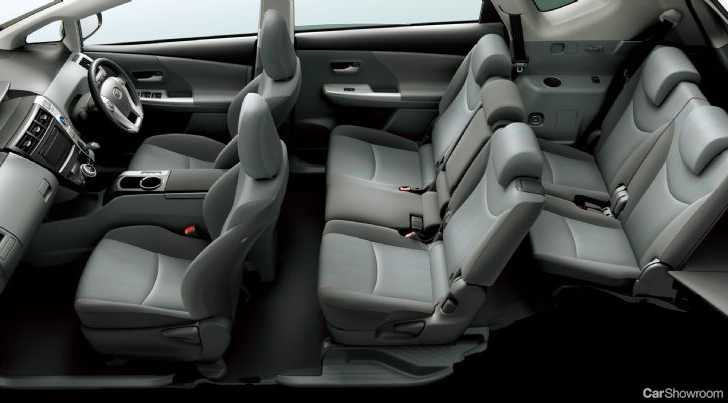
While a fold-away picnic table (the second row seat folded), sliding sun-shades for the second row windows and a 12-volt power outlet for the third row seats (handy for electronic games) are appreciated for family buyers, so versatile is the Toyota Prius V’s interior, you can fold all seats flat and turn it into a light delivery van type vehicle as used by medical couriers and florists.
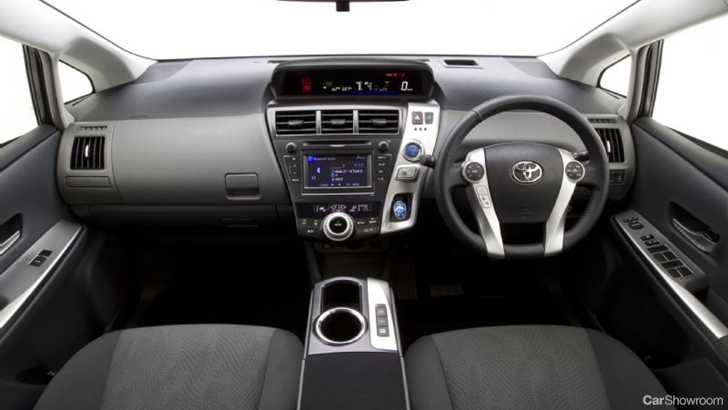
Otherwise – dashboard layout, driving position, steering wheel etc – it’s the Toyota Prius with which we’re now familiar. Except for the centre console where the newly-located lithium ion batteries are stored in a box arrangement between the two front seats (naturally there’s still plenty of storage, it’s just different to the other Prius models).
Pleasingly, Toyota Prius V comes standard with a reversing camera – certainly appreciated by family buyers.
Luggage space is impressive – the tailgate opening is 1105mm wide (95mm wider than standard Prius) and, measured at the third row seats, the luggage area is 1580mm wide. Fold the third seat row and Prius V delivers 485-litres of flat space and can easily accommodate four full-size golf bags.
Toyota Prius V Exterior & Styling
Obviously similar to other members of the Prius family, but in fact every external panel on the Prius V is unique. While delivering its spacious, seven-seat interior, stylists developing the Toyota Prius V focused on a relatively long, low look with minimal frontal area for enhanced aerodynamics (cD is 0.29).
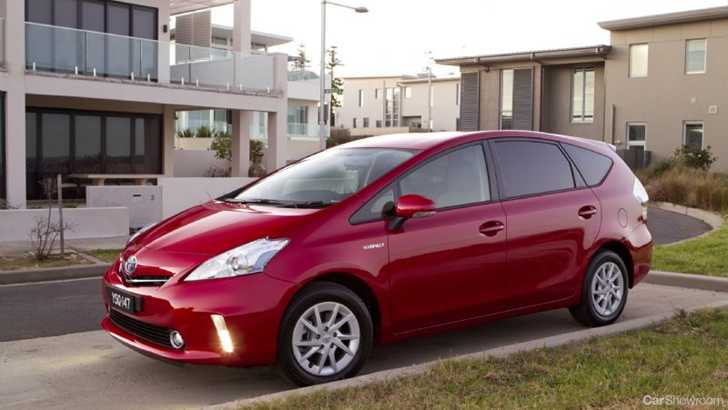
The hallmark Toyota hybrid sharp bumper edges are part of the aero story as are underbody covers and a tapered rear-end with integrated roof spoiler. The front bumpers also incorporate stylish LED DRLs.
And while the usual Toyota Prius ‘Triangle’ profile is maintained, naturally there is an extended look behind the C-pillars. Compared to the regular Prius, Prius V is 135mm longer overall, the wheelbase is 80mm longer (mostly behind the B-pillar) and height is up by 100mm.
At the rear, the new hatchback design is smart (1105mm tailgate height) for easy loading and nice metal-look tail-lights are the latest style.
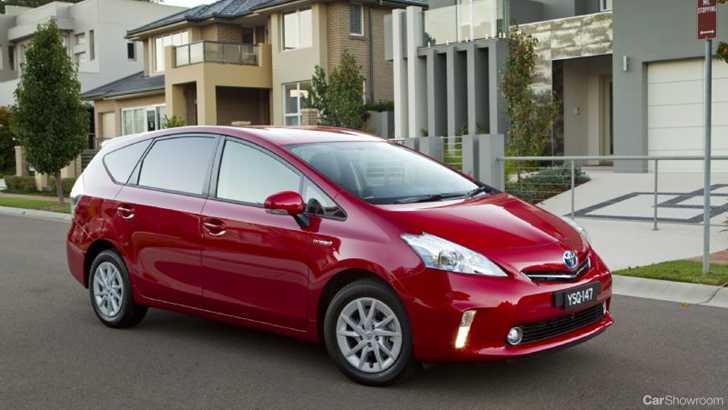
Toyota Prius V runs 16-inch alloy wheels with aero covers.
And despite the extra size, the Toyota Prius V tips the scales just 135kgs heavier than the regular Prius (helped by an aluminium bonnet).
Toyota Prius V On The Road
Toyota sent us through Sydney suburbia from Milsons Point, north of the Harbour Bridge, out to Leppington and onto rural roads and freeways to Thirlmere, in the rural south-west. That’s a good mixture of the type of roads most Australian families tackle every week.
And here’s the thing – clever, seamless operation of the Toyota Prius V’s hybrid drivetrain means you’re minimizing fuel consumption while easily keeping pace with the city/suburban traffic. You really don’t notice you’re driving a hybrid except the various fuel consumption displays on the centre console confirm just how efficiently you’re progressing.
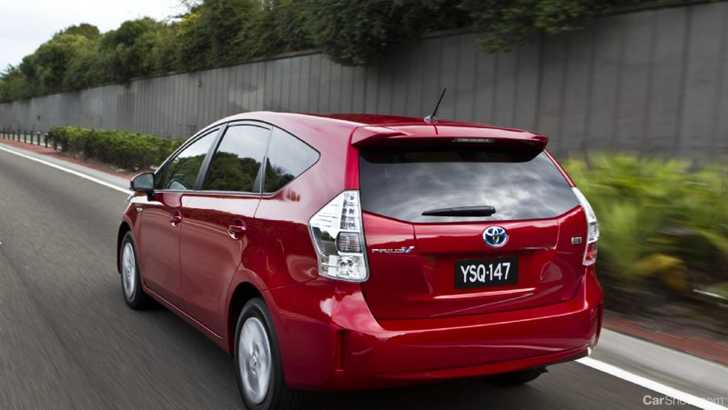
And it’s that seamless transition which is at the heart of all Toyota Prius vehicles. This easy transition is what will ultimately convince skeptics about the benefits of hybrids.
“Pitch and Bounce Control” is a term Toyota’s Prius chief engineer Makoto Okabe uses to describe the unique suspension calibration adopted for the Prius V. Amongst the changes are a re-location of the rear struts (42mm lower for enhanced luggage space), a stiffening of the shock absorbers in compression and torsional rigidity up by 18 per-cent.
Hard to detect any real changes in our one-day drive over a limited number of rural roads, but – as you would expect from Toyota – the Prius V showed real competence thanks to a re-tune of the electric power steering and larger brakes to handle the extra weight. Balance and grip levels were fine and in fact, thanks to some extra sound-deadening, the Prius V is a tad more refined than its Prius stablemates.
Toyota Prius V Challenges
Quite a number of long hills on the drive route had the Prius V’s CVT automatic transmission working hard - however despite its extra size and bulk, you can still tick the acceleration ‘box’ thanks to a revised final drive ratio (3.7:1 for Prius V compared to 3.3:1 for the regular Prius.
Toyota Prius V Verdict
At last a hybrid for larger families. Toyota is on a mission with the Prius and when you consider all models – the hatchback, compact Prius C and now the roomier Prius V – well hybrid motoring can now be considered by most Aussies.
Whether you’re keen to reduce your carbon footprint or look to reduce your operating costs, Toyota Prius V’s high-tech solution combines seven seats and 4.4l/100kms – and that’s impressive by any measure.
And when you consider the enviable reliability record for all Toyota hybrids and Toyota Service Advantage capped price servicing during the warranty period – each of six scheduled services priced at $130 – well there’s a lot to like about Prius’ new family member.
Toyota Prius V The Competition
Toyota Prius V is currently the only hybrid-powered seven seater – priced from $35,990 and of course delivering combined cycle fuel consumption of just 4.4l/100kms, the newest Prius stacks-up competitively against similar (though non-hybrid) seven-seaters.
For example, Nissan’s excellent made-in-England Dualis +2 (2.0-litre petrol, 8.5l/100kms fuel consumption) is priced at $29,990 and $34,690 in two-wheel-drive form.
Kia Rondo is Australia’s lowest-priced seven-seater ($25,990 to $31,390). Kia’s 2.0-litre petrol engine’s fuel consumption is rated at 8.5l/100kms and 8.6l/100kms.
And the supremo in this league is the Honda Odyssey ($37,100 to $44,920). But you pay a price for the Honda’s abundant space/luxury with the Odyssey’s 2.4-litre petrol engine scoring fuel consumption of 8.9l/100kms
Likes:
High-tech, fuel-efficient hybrid drivetrain; versatile interior
Dislikes:
Dynamically not as sharp as the more expensive Honda Odyssey


