
Jaw-dropping, hybrid-embarrassing, low fuel consumption/exhaust emissions; sharp price
Interior just a little too sparse so it lacks some ‘Volkswagen-ness’
The most fuel-efficient Volkswagen Golf ever – that’s the Golf BlueMotion now on-sale in Australia. This 1.6-litre turbo-diesel dazzles with 3.8l/100kms and a range between re-fills of more than 1400kms.
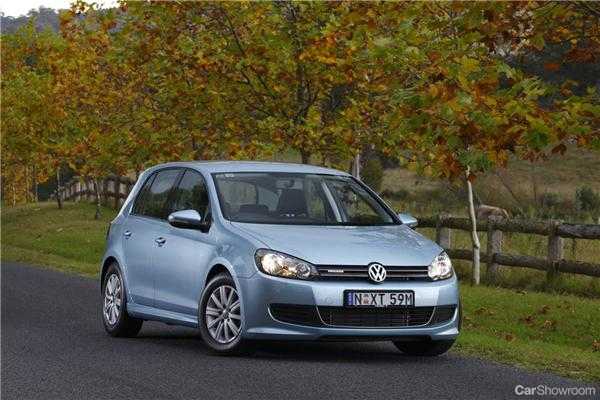
But the good news is, despite toasting the hybrids on fuel economy, the Volkswagen Golf BlueMotion looks and feels just like any other Golf…you’re driving green without looking and sounding like a science experiment.
Sure there’s hybrid-this, fuel-cell-that and electric the other…but until there’s some massive advances in infrastructure and supporting technology (which will take time) the internal combustion engine is where it’s at for the automotive industry.
The engineering smarts of the Volkswagen Golf BlueMotion show that’s not such a bad thing – and both sides of the fence should be happy driving this German masterpiece.
Volkswagen Golf BlueMotion Overview
In a nutshell, the Volkswagen Golf BlueMotion is a ‘Trendline’ grade Golf with a fuel-sipping 1.6-litre turbo-diesel engine driving through a five-speed manual transmission. So that means being fuel-wise requires no compromise on comfort, convenience, quality or chassis dynamics.
There’s a slight price premium for this remarkable fuel-saving technology – the BlueMotion Golf stickered at $28,990 to $24,990 for the equivalent Trendline model. But that’ still good value compared to the $34,990 starting price of Toyota’s Prius hybrid (not that we think they’re directly comparable…but you know where we’re coming from).
Volkswagen Golf BlueMotion Engine
Here are the impressive stats for the Volkswagen Golf BlueMotion’s 1.6-litre turbo-diesel: 77Kw of power at 4400rpm, peak torque of 250Nm from 1500rpm – 2500rpm; combined cycle fuel consumption of 3.8l/100kms and exhaust C02 emissions rated at just 99g/km. Zero to 100km/h takes 11.3 seconds and, with its 55-litre fuel tank, a range between refills north of 1400kms is do-able.
Volkswagen Golf BlueMotion achieves these remarkable figures thanks to not overly-complicated technology – re-calibrated engine management system, reduced idling speed, Simos direct injection, Auto Start/Stop and regenerative braking being the main ones.
Other contributions come from taller ratios for third, fourth and fifth gears in the five-speed manual transmission, the light-weight wheels with low rolling-resistance tyres and minor aerodynamic improvements.
And there’s no downside in terms of refinement – the Volkswagen Golf BlueMotion, like all current European turbo diesels, is superbly quiet at all engine speeds and even in cold morning start-ups.
Volkswagen Golf BlueMotion The Interior
Inside the Volkswagen Golf BlueMotion highlights its distinctiveness by being…well, blue! Seat fabrics have a blue hue and there are titanium-look trim finishes plus extra information on the dashboard multi-function display (including the gear selection ‘advisory’ which encourages fuel-efficient driving).

Otherwise the ‘BlueMotion’ model is pretty much the usual Volkswagen Golf high standard interior (BlueMotion is pretty much equivalent to ‘Trendline model grade) – manual height adjustment for the drivers’ seat combining with rake/reach adjustment for the steering wheel for a top-shelf driving position, precise instrumentation with modern blue backlighting. Audio is an MP3-compatible CD system.
Rear seat space is on par with others in the segment and luggage capacity is 350-litres with the rear seat in place or 1305-litres when folded.
Volkswagen Golf BlueMotion Exterior & Styling
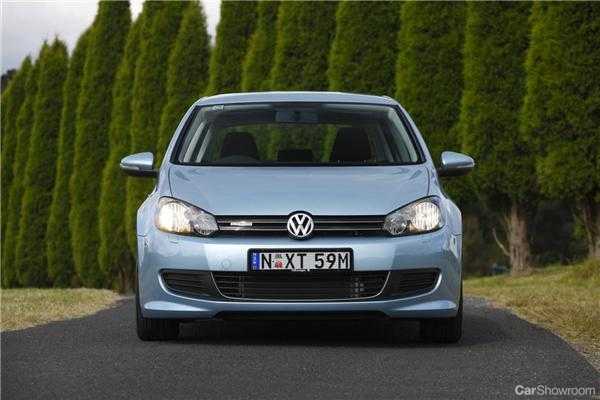
On the outside, only minor changes distinguish the fuel-miser Volkswagen Golf BlueMotion from other Golf models. At the front, there’s some extra chrome for the grille while the rear features ‘smoked look’ lights.
Aerodynamics are important for minimized fuel consumption so the Volkswagen Golf BlueMotion actually runs bumpers and side skirts from the sporty R-line and a rear hatch spoiler from the Golf GTI. Suspension ride height is reduced by 15mm.
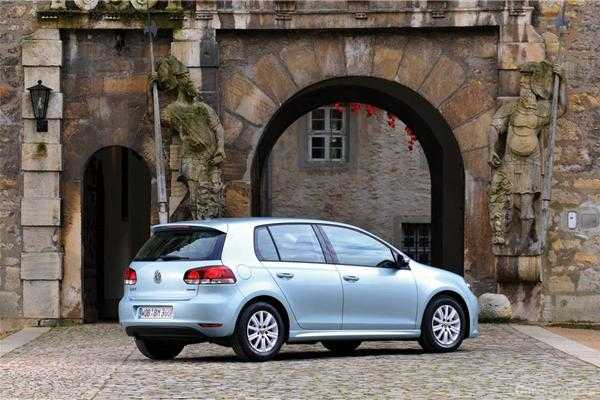
Wheels are 15-inch ‘Wellington’ alloys, developed for the 195/65 low rolling-resistance tyres.
Our Volkswagen Golf BlueMotion test car was finished in the model line’s special ‘Glacier Blue’ paint.
Volkswagen Golf BlueMotion On The Road
We had plans for an extended country roads fuel economy run for the Volkswagen Golf BlueMotion, but unfortunately time pressures scuttled that idea so it was the usual Car Showroom combination of city, suburban and rural roads test loop for the fuel-sipping diesel from Germany. And sip fuel it did – the Volkswagen Golf BlueMotion’s fuel gauge barely moved from ‘F’ despite a week going over our usual test routes.
There’s some clever innovation behind the incredibly low fuel consumption of the Volkswagen Golf BlueMotion, but also some basic engineering like taller ratios for third, fourth and fifth gears. On that subject we have read some criticism of the Volkswagen Golf BlueMotion’s mid-range acceleration (important for safe overtaking).
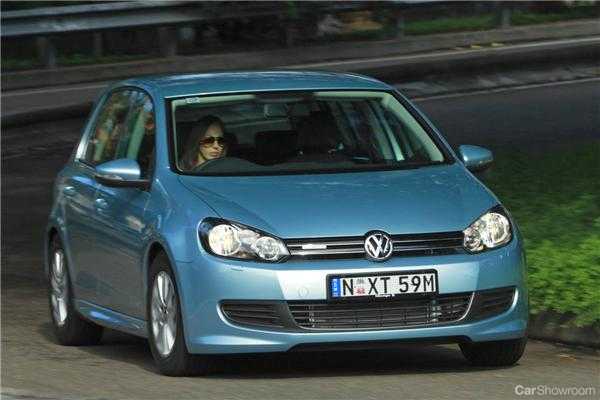
That’s not a point of view we agree with. Yes, mid-range the BlueMotion is no Golf R, but around town and even over our high-speed mountain roads test route, we had no complaints. Like any car, the torque characteristics of the Volkswagen Golf BlueMotion are what they are, you drive accordingly…and of course in this case, the payback is truly remarkable fuel consumption.
Likewise the low rolling-resistance tyres ultimately don’t have the grip levels and low noise of other specialist rubber, but we’re talking pretty fine degrees here and no product gets the green light from Volkswagen’s fastidious engineers unless it’s mighty damn fine.
Otherwise the BlueMotion is a Volkswagen Golf turbo-diesel with a five-speed manual transmission. So that means top-shelf, relatively sporty driving dynamics, ‘firm-ish’ German suspension and all-round precision which both enthusiast and non-enthusiast drivers will enjoy.
Volkswagen Golf BlueMotion Challenges
Criticizing a car with 3.8l/100kms fuel economy and exhaust emissions of just 99g/km is a bit like kicking Humphrey B. Bear in the shin…it just somehow doesn’t feel right.
If pressed, we would deduct some points from Volkswagen’s Auto Start/Stop system which can be a bit rough and clunky on re-starts (Jaguar’s system is the benchmark for smoothness/quietness/un-intrusive operation – so it is possible).
Volkswagen Golf BlueMotion Verdict
If you’re looking to spend around $28,000 on a hatchback, why wouldn’t you do the planet a favour, buy a Volkswagen Golf BlueMotion and enjoy some retail therapy with the dollars you save in fuel? The answer of course is different needs and tastes, diesel v petrol etc…but given the all-round credentials of the Volkswagen Golf BlueMotion it’s a valid question.
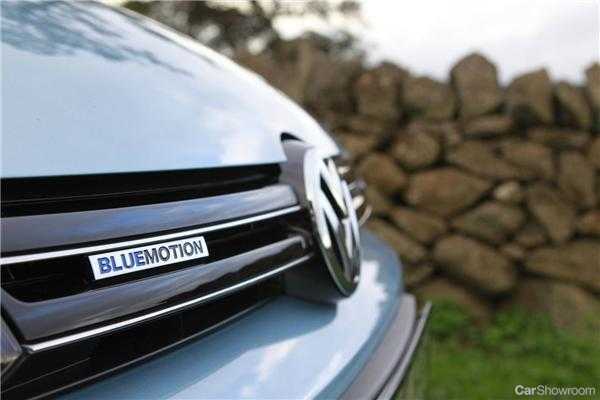
And if you follow our logic, that question is why the Volkswagen Golf BlueMotion succeeds – because to enjoy 3.8l/100kms-99g/km you really don’t have to compromise on any of the substantial key qualities Germany’s global hatchback hero. No geeky hybrid cars for you – you’re ‘green’ and you drive a Golf.
Come to think of it, Volkswagen’s strategy might be the answer to ‘greening’ our global car fleet – just make fuel-sipping, clean exhaust cars that match their mainstream siblings and consumers might be more inclined to buy them. It’s that sort of clever product planning which is powering Volkswagen towards world number one.
Volkswagen Golf BlueMotion The Competition
Toyota’s Prius hybrid doesn’t quite match the Volkswagen Golf BlueMotion on straight fuel consumption, but has zero-emissions capability and lots of interior space. The Prius is also more expensive and not in the Golf league for driving dynamics.
Ford’s German-sourced Fiesta Econetic matches the Golf BlueMotion for quality, technology and driving dynamics, is slightly ahead on fuel consumption at 3.7l/100kms and is cheaper at $24,990. But of course the mighty Fiesta is a class down in size (Ford needs an EcoNetic Focus).


